
 Get In Touch
 (423) 355-1091
Chattanooga has a reputation for being beautiful most of the year. The mountains, the river, the way fall colors come in along Lookout and Signal. What gets less attention is how rough the local climate is on the things that protect your home, and your roof takes more of that punishment than anything else.
Across areas like Collegedale and the greater Chattanooga region, homeowners deal with a wide range of weather conditions that make roof repair in Collegedale, TN, and nearby communities more common than most expect.
Tennessee Valley humidity, spring thunderstorms, hail, summer heat, fall leaves, occasional ice and snow, and the constant temperature swings of the foothills all add up to a year-round workout for your shingles, flashing, and underlayment.
Knowing how Chattanooga weather and roof damage interact is the first step to getting ahead of problems before they become expensive ones, and most homeowners only think about it after a leak shows up.
We work on roofs across the Chattanooga area every week, and the patterns repeat year after year. The same kinds of damage show up in the same kinds of homes for the same reasons. Here’s the breakdown of what’s happening up there and what you can do about it.
The Three Main Weather Conditions That Damage Your Roof
Three weather patterns affect Chattanooga roofs more than anything else. Each one creates its own type of damage, and most homes deal with all three over the course of a year.
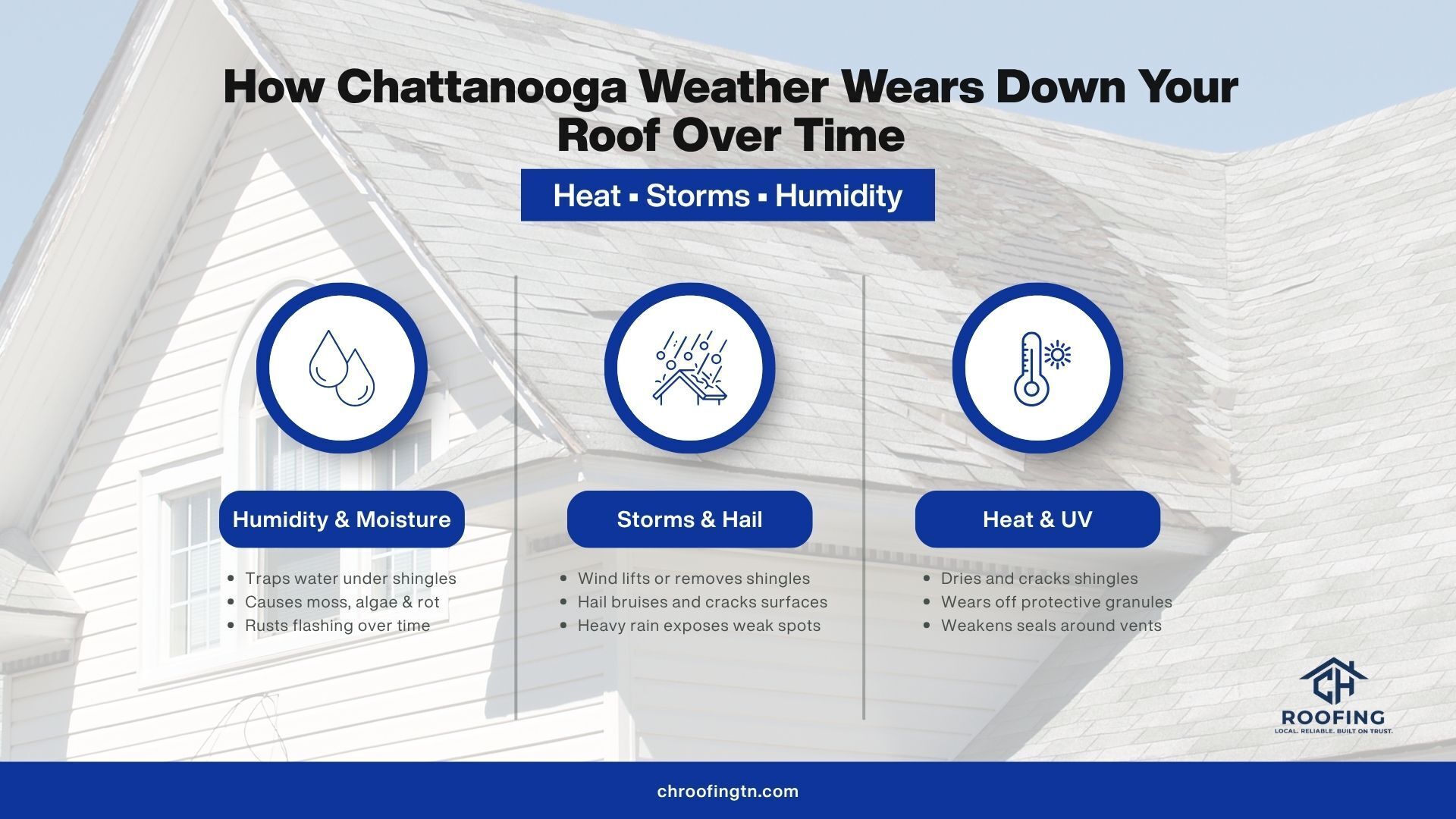
Humidity and Moisture
The Tennessee Valley sits in a relatively humid climate. Average humidity is high through much of the year, especially in the warmer months. That moisture finds every weak spot in a roof system. It seeps under loose shingles. It creates conditions for moss and algae growth on shaded sections. It feeds wood rot in any decking that gets damp. It rusts metal flashing and fasteners over time.
Combined with the area’s frequent rainfall (Chattanooga averages over 50 inches of rain per year), humidity is the slow-burning enemy of every roof in the region. You don’t notice it day to day, but it’s working on your shingles constantly.
Spring Storms and Hail
Chattanooga sits in a part of the country that gets significant severe weather in spring and early summer. Thunderstorms roll through regularly, and some of them bring hail, high winds, and heavy rain. Hail damage is one of the most common reasons we get called for roof inspections in this area, and it’s also one of the most overlooked types of damage because it doesn’t always look bad from the ground.
Wind can lift shingles, tear off flashing, and rip apart ridge caps. Heavy rain can find any compromised seal and turn it into a leak. Falling tree branches during summer storms add another layer of risk for any home with mature trees nearby.
Heat and UV
Chattanooga summers get hot, and the sun is intense. Asphalt shingles age faster under prolonged heat and UV exposure. The granules that protect the shingle surface gradually wear off. The asphalt underneath becomes brittle. The roof loses its ability to shed water as efficiently. Most asphalt roofs in this climate last 15 to 25 years, and the upper end of that range only happens with proper installation and maintenance.
Heat also bakes the sealants around vents, skylights, and chimneys, drying them out and creating tiny gaps where water finds its way in.
Specific Types of Damage You’ll Likely See
Knowing what to look for makes a big difference. Here are the most common roof problems we encounter on Chattanooga area homes:
Lifted or curling shingles. Wind, age, and heat cause the edges of shingles to lift or curl. Once they start curling, they’re more vulnerable to wind and water, and the damage spreads.
Missing shingles. Especially after storms. Sometimes, only a few here and there. Sometimes a whole section. Always worth investigating because the underlayment beneath is now exposed.
Granule loss. Look in your gutters after a rain. If you see lots of small dark granules, your shingles are aging and losing their protective coating. A small amount is normal. A heavy buildup is a sign of advanced wear.
Hail damage. Bruised or cracked shingles, dents in metal valleys and flashing, and pitted soft metal vents. Hail damage is often invisible from the ground but obvious from a ladder.
Damaged flashing. Around chimneys, vents, skylights, and where the roof meets walls. Flashing rusts, cracks, and pulls loose from the sealant over time. These are the most common leak points on most roofs.
Moss and algae. Especially in shaded areas under tree cover. Moss holds moisture against shingles and accelerates their breakdown. Algae stains look ugly and indicate excess moisture retention.
Sagging or uneven roof lines. A serious sign of decking damage or structural issues underneath. Worth a professional look as soon as you notice it.
Stained ceilings inside the home. The slowest-moving sign but one of the clearest. Any stain on a ceiling means water has been getting in for a while.
Why Roof Inspection in Spring is a Must
Spring is the best time of year for a roof inspection in Chattanooga, and it’s not just because of the weather. There are specific reasons spring inspections catch things other seasons miss:
- Winter damage is fully visible without snow or ice covering it
- Storm season is starting, so you have time to fix issues before the first big storm
- The trees haven’t fully leafed out yet, making damage easier to see
- Roofers are less booked than in the summer
- Insurance claims for hail and storm damage are easier to prove when the timing is fresh
- Any repairs can be done in mild weather instead of summer heat
- Catching issues now prevents the cascade of summer problems they often cause
A good spring inspection takes 30 to 60 minutes for an experienced roofer and identifies anything urgent before it becomes urgent.
How Long Should a Chattanooga Roof Actually Last?
Lifespan depends on the material and the quality of the installation:
- Three-tab asphalt shingles: 15 to 20 years
- Architectural asphalt shingles: 25 to 30 years
- Metal roofing: 40 to 70 years
- Slate: 75 to 200 years (rare in Chattanooga)
- Tile: 50 to 100 years (rare in this region)
- Wood shake: 20 to 30 years (with maintenance)
These are general ranges. Chattanooga conditions tend to push asphalt shingle life toward the lower end of the range due to humidity, sun, and storms. A roof that might last 25 years in a milder, drier climate often needs replacement at 18 to 22 years here.
What You Can Do as a Homeowner
You don’t need to be a roofer to take care of your roof. Some basic habits help:
- Walk your property after every major storm and look at the roof from the ground
- Clean your gutters at least twice a year
- Trim back tree branches that hang over the roof
- Look for granule buildup in gutter splash areas
- Check your attic for water stains, daylight, or signs of moisture
- Notice any new ceiling stains inside the home immediately
- Schedule a professional inspection every 1 to 2 years
- Address small repairs before they become big ones
- Don’t wait until a leak shows itself
- Keep an eye on flashing areas where things penetrate the roof
These habits alone catch most issues before they become emergencies.
When to Call a Roofing Contractor in Chattanooga
Some signs mean you need professional help right away:
- Visible damage after a storm
- Active leaks anywhere in the home
- Sagging roof areas
- Multiple missing shingles
- Major hail event in your area
- Tree branches that fell on the roof
- New ceiling stains inside
- Unexplained mold or musty smells in the attic
- A roof that’s reaching the end of its expected lifespan
A short professional visit gives you a clear picture of what’s happening on your roof and what needs attention.
Why Insurance Timing Matters
Storm damage claims have time limits. If hail or wind damages your roof, the longer you wait to report it, the harder it becomes to prove the damage was caused by a specific event. Most policies have specific claim windows that tie back to the date of the storm.
The best practice after a major storm:
- Take dated photos from the ground
- Note the date and severity of the storm
- Schedule a professional roof inspection within a few days
- Get a written report documenting any damage found
- File the insurance claim with the report attached
- Avoid making permanent repairs before the adjuster sees the damage
- Make temporary repairs only as needed to prevent further damage
A documented inspection right after the event makes the difference between a smooth claim and a denied one.
Preventive Maintenance That Actually Helps
If you want to extend your roof’s life, focus on these things:
- Replace damaged or missing shingles promptly
- Clean off moss and algae before they spread
- Keep gutters flowing freely
- Reseal flashing as needed
- Trim trees back from the roof
- Make sure attic ventilation is working properly
- Check for damaged ridge caps and replace as needed
- Replace deteriorated pipe boots and vent gaskets
- Inspect after every major storm
- Schedule regular professional checks
None of these is expensive on its own. Together, they can add years to the life of your roof.
Wrapping Up
Chattanooga weather isn’t going to ease up anytime soon. Humidity, storms, heat, and the occasional winter ice all keep working on your roof whether you pay attention or not. The good news is that staying ahead of it isn’t hard if you know what to look for and you’re willing to act on what you find. A few habits, a yearly inspection, and prompt repair when something shows up will keep your roof in good shape for its full expected lifespan.
When you’re ready for a professional eye on your roof, we’re happy to come out, walk through what’s going on up there, and give you straight answers on what needs attention now versus what can wait. At CH Roofing, we work on Chattanooga area roofs every week, and we know exactly what this climate does to them. Give us a call when you’re ready, and we’ll take it from there.


